
Why Gold Trading Is Getting More Attention From US Traders
Gold trading is getting more attention from US traders as interest rates, the dollar, inflation data, and gold futures shape the market. Here is how these factors work, and what risks come with trading gold.
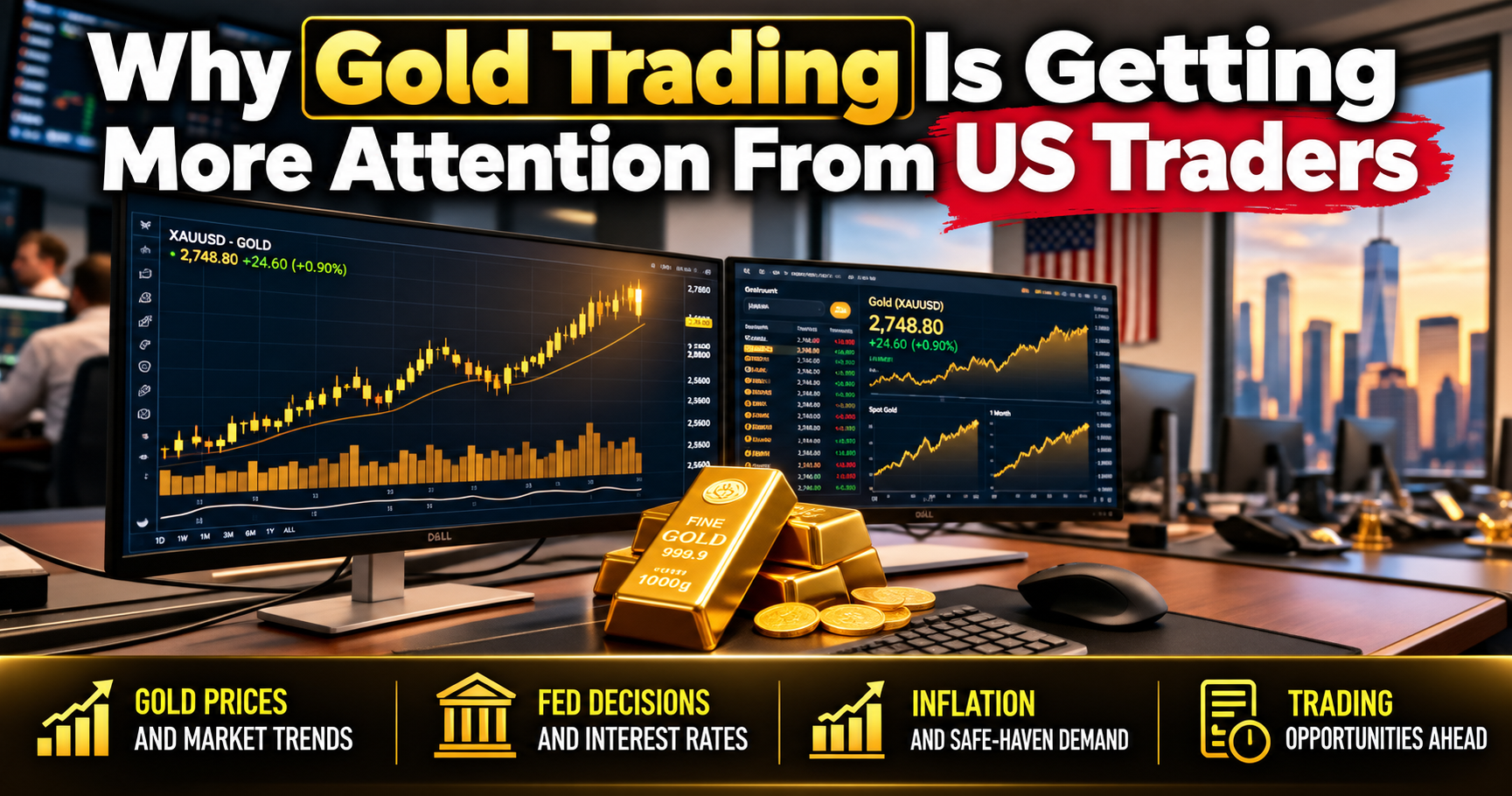
A single jobs report or inflation reading can send gold moving within minutes. That reaction is one reason gold trading stays on the radar for many US traders. Gold sits at the crossroads of several major forces: Federal Reserve policy, Treasury yields, the US dollar, and global uncertainty. When any of these shifts, the gold market often responds.
Gold also has an unusually broad audience. Futures traders, ETF investors, and people who simply follow the gold price all look at the same market from different angles. This article explains what draws attention to gold, how interest rates and the dollar can influence it, how gold futures work, and what risks come with trading it.
Why Are US Traders Watching Gold?
Gold is often described as a safe-haven asset. The idea is that when markets feel uncertain, some investors look for assets that have historically held value differently from stocks or bonds. That reputation draws attention during periods of economic stress, financial turbulence, or political tension.
"Safe haven" does not mean "safe." Gold prices can fall sharply, and a drop can happen even while other markets are struggling. The label describes how some investors have viewed gold, not a promise about how it will perform.
Gold futures activity adds another layer. Futures are traded on regulated exchanges, and price movements there help shape how the wider gold market is perceived. Many traders follow futures prices as a real-time read on sentiment.
Part of what makes gold hard to read is that it rarely responds to just one thing. On a single day, a rate expectation, a dollar move, and a geopolitical headline may all pull in different directions.
How Interest Rates Can Affect Gold Trading
Gold does not pay interest or dividends. A Treasury bond pays interest, and a savings account may as well. Holding gold means giving up that income, and economists call this the opportunity cost.
When interest rates and Treasury yields rise, income-producing assets look more attractive compared with gold. That can reduce demand for gold. When rates fall, or are expected to fall, the cost of holding a non-yielding asset shrinks, which can make gold more appealing.
Federal Reserve policy sits behind much of this. Traders pay close attention to what the Fed does, but also to what it signals. Markets move on expectations, so a change in how traders think rates will move can matter as much as an actual rate decision.
The relationship is not a fixed rule, though. Gold has risen in some periods of higher yields and fallen in some periods of lower ones. Inflation, growth concerns, and global demand can overpower the rate effect.
The US Dollar Also Matters
Gold is priced in US dollars across most major markets. That means the dollar's value affects what gold costs for buyers who use other currencies.
When the dollar strengthens, gold becomes more expensive for buyers holding euros, yen, or pounds. That can weigh on demand and put pressure on the price. When the dollar weakens, gold can look cheaper to those buyers, which may support the price.
Still, the link is not automatic. Gold and the dollar sometimes rise together, especially when worries about global stability lift demand for both. Interest rates, central bank buying, and investor sentiment can all complicate the picture. The dollar is a useful signal to watch, not a switch that controls gold.
Gold Futures Are an Important Part of the Market
A gold futures contract is a standardized agreement to buy or sell a set amount of gold at a set price on a future date. Because the terms are standardized, the contracts can trade on an exchange. Many traders use futures to speculate on price changes, and others use them to manage price risk. Most traders close out positions before delivery would occur.
Contract size matters. According to CME Group, the standard Gold futures contract (GC) represents 100 troy ounces. CME also lists smaller contracts: Micro Gold futures (MGC) at 10 troy ounces, and a 1-Ounce Gold contract (1OZ) introduced in 2025.
Smaller contracts mean smaller exposure per contract. If gold moves by one dollar per ounce, a 100-ounce contract changes in value by $100, while a 10-ounce contract changes by $10. That gives traders more control over position size, though it does not remove risk.
Margin requirements, trading hours, and contract details change over time, so check the current CME Group specifications before relying on any figure.
What Economic News Can Move Gold?
Traders rarely react to headlines alone. They ask what each development says about interest rates, the dollar, and risk.
Federal Reserve decisions. Rate decisions and policy statements can change expectations about borrowing costs, which feeds into Treasury yields and the dollar.
Inflation reports. Inflation data can shift views on how the Fed might act. Gold is also sometimes associated with inflation concerns, though that relationship varies.
Employment reports. Strong job numbers can suggest the economy is running hot and that rates may stay higher. Weak numbers can suggest the opposite. Either way, the rate outlook shifts.
Treasury yields. Yields reflect what the bond market expects from rates and growth. Because they represent the return available elsewhere, gold traders watch them closely.
US dollar movements. A sharp move in the dollar can influence gold even when there is no gold-specific news.
Geopolitical developments. Conflict, sanctions, and political tension can raise uncertainty, which sometimes increases interest in gold.
Changes in market expectations. Markets often move before an event occurs. If traders already expect a certain result, the actual announcement may cause a smaller reaction than expected, or a surprising one.
Gold Trading Is Different From Buying Physical Gold
People use "gold" to describe several different things, and each works differently.
Physical Gold
Gold bars, coins, and jewelry are tangible. Owners deal with storage, insurance, purchase premiums, and resale costs. Jewelry also carries design and craftsmanship costs that are separate from the gold content.
Gold ETFs
Exchange-traded products can give investors exposure to gold prices without storing metal themselves. Shares trade on stock exchanges like other securities. Structures and fees vary, so it helps to read each fund's documents.
Gold Futures
Futures are standardized contracts with expiration dates and margin requirements. They involve different mechanics and risks from owning metal. A futures position is an exchange-traded agreement, not a bar in a vault.
Spot Gold / XAU/USD
Spot gold refers to the current market price for immediate pricing of gold. XAU/USD is the common symbol for it: XAU stands for one troy ounce of gold, quoted in US dollars. It is widely used as a price reference.
What Should Traders Watch Before Trading Gold?
No checklist guarantees a good outcome, but these items help traders understand the conditions around them:
- Federal Reserve announcements: Rate decisions, statements, and press conferences.
- Inflation data: Reports that may change rate expectations.
- Employment reports: Job and wage data that affect views on the economy.
- US dollar movements: Particularly sharp or sudden changes.
- Treasury yields: A rough measure of what traders expect from interest rates.
- Geopolitical news: Events that may shift risk appetite.
- Gold futures activity: Price action and how the market reacts around major events.
- Market volatility: Wider swings mean more uncertainty.
- Broader economic expectations: What the market already assumes may be built into prices.
Experienced traders usually weigh these together. One indicator can mislead when viewed alone.
Gold Trading Can Come With Significant Risk
Gold prices can be volatile. Large moves can happen quickly, especially around major announcements.
Futures add another layer. They typically involve leverage, meaning a trader controls a large contract value with a smaller amount of margin. Leverage magnifies results in both directions. A small price move can have an outsized effect on a leveraged position, and losses can exceed what a trader expected.
Economic announcements can also move prices rapidly, sometimes faster than a trader can respond. Past performance does not guarantee future results, and traders can lose money. This article is educational and is not personal financial advice. Anyone considering trading should understand the product, review official exchange and broker disclosures, and consider speaking with a qualified financial professional.
Why Gold Remains on the Radar of US Traders
Several factors keep gold in focus:
- Federal Reserve expectations can influence the market.
- Interest rates and Treasury yields shape the opportunity cost of holding gold.
- The US dollar can influence gold prices.
- Inflation data can affect market expectations.
- Employment data can influence rate expectations.
- Economic and geopolitical uncertainty can affect demand and sentiment.
- Gold futures provide an important trading market.
- Gold can experience significant volatility.
None of these points predicts a direction. They explain why gold draws attention.
What to Remember
US traders keep watching gold because it responds to many of the same forces that move the broader economy: interest-rate expectations, Treasury yields, the dollar, inflation, jobs data, and global uncertainty. Gold futures give the market a visible center, and the volatility keeps traders paying attention.
For readers, the useful takeaway is how these pieces connect. A headline or a single day's price move rarely tells the full story. Understanding the economic indicators and market conditions behind gold trading gives better context than reacting to one number. Gold can be volatile and carries real risk, so careful research and risk awareness matter.
Written by
EmmaYou might also like
Russell 2000 Trading Trends: What Small Caps Did in 2026
Learn what the Russell 2000 is, how small-cap stocks moved in 2026, and why interest rates matter. A simple beginner’s guide to Russell 2000 trading trends.
Cryptocurrency Trading in the US Market Trends, Risks and Key Insights
This beginner-friendly guide explains how US crypto trading works in 2026. It covers market trends, US regulations, crypto taxes, popular exchanges, and the main risks, with practical tips for trading more safely.
Why AMD Stock Is Moving Higher and What Comes Next
AMD stock crossed a $1 trillion market value in September after record Data Center growth and a new $8.2 billion acquisition. Here is what is behind the rally, the numbers that matter, and the risks to keep in mind.
US Stocks Near Record Highs: Why Traders Are Nervous
US stocks are near record highs as traders watch the Fed, Treasury yields, inflation, and options expiration for signs of a market move.
Comments (0)
Be the first to comment.