
Fall Allergies vs. a Common Cold: How to Tell the Difference
Sneezing, sniffling, and a stuffy nose can mean fall allergies or a common cold. Here’s how to spot the difference and what to do about it.
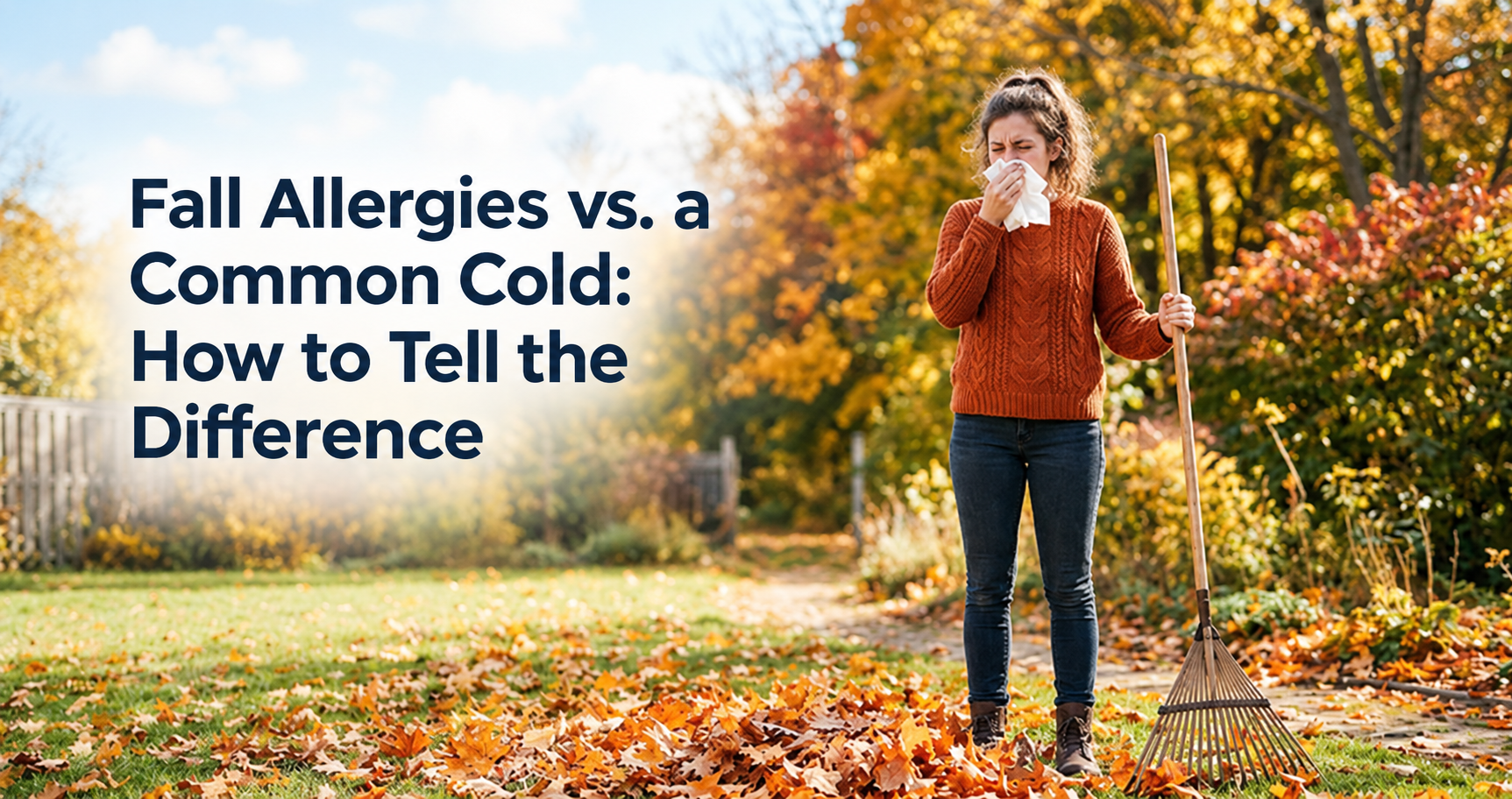
Fall Allergies vs. Cold: How to Tell the Difference
You spend a Saturday afternoon raking leaves, and by evening your nose is running, your eyes feel scratchy, and you can’t stop sneezing. Is it a cold coming on, or are fall allergies to blame? Plenty of people ask themselves this question every autumn.
The two conditions look alike, but they have different causes, timelines, and treatments. This guide explains what sets them apart, how to manage each one at home, and when it’s time to call a doctor.
Why Do Fall Triggers Cause Sneezing and a Runny Nose?
Autumn feels like a break for allergy sufferers, since spring flowers are long gone. But the season brings its own set of triggers.
Ragweed Pollen
Ragweed is one of the best-known fall allergens in the U.S. A single plant can release a huge amount of light, powdery pollen that travels easily on the wind. Ragweed season often runs from late summer until the first hard frost, so it can stretch well into fall.
Mold, Dust Mites, and Leaf Piles
Damp fallen leaves are a perfect place for mold to grow. When you rake, jump in a pile, or bag them, you stir up spores that are easy to breathe in. Mold can also grow on wet outdoor items and in damp corners of your home.
Dust mites are another culprit. They live in bedding, carpets, and upholstered furniture, and they don’t go away when the weather cools.
Indoor Dust When the Heat Comes On
The first time you turn on your heating each year, dust that has settled in vents and ductwork gets blown around your home. That’s why some people sneeze more indoors as the weather turns chilly. Closed windows also mean less fresh air moving through your living space.
What Are Fall Allergies?
Fall allergies, sometimes called seasonal allergic rhinitis, happen when your immune system overreacts to something that is normally harmless. Your body treats pollen or mold spores as a threat and releases chemicals such as histamine. Those chemicals cause the sneezing, itching, and congestion you feel.
An allergy is not an infection, so there is no virus or bacteria involved. That’s why allergies don’t cause a fever and can’t be passed to other people. Symptoms usually last as long as you are around the trigger, which could mean several weeks.
Ragweed allergy is the classic example. If your symptoms show up every year around the same time, a seasonal allergy is a strong possibility.
What Is a Common Cold?
A cold is a mild infection of the nose and throat caused by a virus. Many different viruses can be responsible, which is why you can catch more than one cold in a single season. Fall is a common time for colds because people spend more time indoors, close to each other.
Colds spread through droplets in the air when someone coughs or sneezes, and through touching surfaces that carry the virus. Most colds clear up on their own without special treatment. Your body does the work while you rest.
Fall Allergies vs. Cold: Key Differences
Here’s how the two compare, one feature at a time. Keep in mind that every person is different, so you may not match every point.
- CauseFall allergies: an immune reaction to pollen, mold, or dust
- Cold: a virus
- How it startsFall allergies: suddenly, often after exposure to a trigger
- Cold: gradually over a day or two, often with a sore throat
- How long it lastsFall allergies: weeks, as long as the trigger is around
- Cold: usually about 7 to 10 days
- FeverFall allergies: no
- Cold: sometimes, usually mild
- Body achesFall allergies: not typical
- Cold: mild aches are common
- Itchy eyesFall allergies: very common
- Cold: uncommon
- SneezingFall allergies: frequent, often in repeated bursts
- Cold: common, but not as intense
- Mucus typeFall allergies: thin and clear
- Cold: starts clear, may turn thicker and yellow or green
- ContagiousFall allergies: no
- Cold: yes
Symptoms Breakdown
Looking at the full picture of symptoms can help you spot patterns you might miss otherwise.
Fall Allergy Symptoms
Fall allergy symptoms tend to center on the eyes, nose, and throat. You may notice:
- Frequent sneezing, sometimes many times in a row
- A runny or stuffy nose with thin, clear mucus
- Itchy, watery, or red eyes
- An itchy throat, nose, or roof of the mouth
- Postnasal drip that can cause a tickle or mild cough
- Tiredness from poor sleep due to congestion
Symptoms often get worse outdoors on windy, dry days, or after you spend time around leaves or dust.
Common Cold Symptoms
Cold symptoms often build up in stages. A sore or scratchy throat is usually the first sign, followed by:
- A runny nose that may thicken over several days
- Nasal congestion and sneezing
- A cough that can linger after other symptoms fade
- Mild headache or body aches
- A low-grade fever, more often in children
- General tiredness
Most people start to feel better after a few days, and the worst is usually over within a week.
Fall Allergies or a Cold? Quick Questions to Ask Yourself
Run through this short checklist to get a better sense of what you may be dealing with:
- Are your eyes itchy or watery?
- That points more toward allergies.
- Do you have a sore throat or body aches?
- Those are more typical of a cold.
- Did symptoms come on suddenly after being outside or around dust?
- Allergies are more likely.
- Have you been around someone who was sick?
- A cold may be the cause.
- Has it been going on for more than two weeks?
- That leans toward allergies.
- Is your mucus thin and clear the whole time?
- That also suggests allergies.
- Does it happen around the same time every year?
- A seasonal allergy is likely.
How to Manage Fall Allergies
You can’t avoid every trigger, but a few habits can make a real difference.
Reduce Your Exposure
- Check the local pollen forecast and keep windows closed on high-pollen days.
- Shower and change clothes after spending time outdoors, since pollen clings to hair and fabric.
- Consider wearing a mask when raking leaves or doing yard work.
- Ask someone else to handle leaf cleanup if you are very sensitive to mold.
Keep Your Home Clean
- Wash bedding regularly in hot water to cut down on dust mites.
- Vacuum and dust often, and wipe surfaces with a damp cloth.
- Replace furnace and air conditioner filters on schedule.
- Run an air purifier with a HEPA filter in rooms where you spend the most time.
Consider Over-the-Counter Options
Antihistamines and nasal sprays are widely available and can help ease allergy symptoms for many people. Different products work in different ways, so a pharmacist or doctor can help you choose one that suits you, especially if you take other medicines or have a health condition.
How to Treat a Common Cold
There is no quick fix for a cold, but you can feel more comfortable while your body recovers.
- Rest. Sleep gives your immune system the energy it needs.
- Drink fluids. Water, herbal tea, and broth help keep you hydrated and may loosen congestion.
- Try warm soup. It’s soothing for a sore throat and easy to eat when you have little appetite.
- Use a humidifier. Moist air can ease a stuffy nose and a dry throat.
- Consider OTC cold remedies. Many products are designed to ease symptoms like congestion or aches. Always read the label and ask a pharmacist if you’re unsure, particularly when choosing something for a child.
Antibiotics do not work on colds because colds are caused by viruses.
Allergies, Cold, Flu, or COVID?
These illnesses share some symptoms, which makes them hard to tell apart at home. The flu usually hits faster and harder, with fever, strong body aches, and deep tiredness. COVID-19 can look like a cold or the flu, and it may also cause a change in taste or smell. If you aren’t sure, a test and a call to your healthcare provider are the most reliable ways to find out.
When to See a Doctor
Most allergy and cold symptoms can be handled at home, but some signs deserve medical attention. Contact a doctor if you notice:
- Symptoms lasting more than 10 days without improving
- A high fever or a fever that keeps coming back
- Wheezing, chest tightness, or trouble breathing
- Facial pain or pressure, especially around the sinuses
- Symptoms that interfere with sleep or daily life
Seek urgent care right away for severe breathing difficulty. If you have asthma, allergies can make it harder to control, so check in with your doctor early.
FAQs
How long do fall allergies last?
Fall allergies can last for several weeks, often until a frost reduces pollen in the air. Mold and dust symptoms may continue longer if you keep being exposed to them.
Can you have a cold and allergies at the same time?
Yes. Allergies can irritate your nose and throat, which may make it easier for a cold to set in. If your symptoms change or get worse, it may be a sign that both are at play.
Is a ragweed allergy the same as hay fever?
Ragweed allergy is one common type of hay fever. Hay fever is the everyday name for seasonal allergic rhinitis, and it can be triggered by many kinds of pollen.
Why do my allergies feel worse indoors in fall?
Closed windows and the first use of your heating system can stir up dust, mold, and pet dander. Keeping filters fresh and cleaning regularly can help.
Does green mucus mean I have an infection that needs antibiotics?
Not always. Mucus often changes color during a regular cold as your body fights the virus. A doctor can tell you whether treatment is needed.
Allergy or Cold? A Quick Recap
Itchy eyes, thin clear mucus, and symptoms that drag on for weeks usually point to fall allergies. A sore throat, mild aches, and symptoms that fade within about a week are more typical of a cold. Paying attention to timing, triggers, and how your symptoms begin is the easiest way to tell them apart. When something doesn’t feel right, a doctor can help you sort it out.
Disclaimer: This article is for general information only and is not medical advice. Please consult a doctor or qualified healthcare professional about your symptoms or treatment.
Written by
EmmaYou might also like
How to Prevent Dry Skin in Winter With Simple Daily Habits
Cold air, indoor heating, and hot showers can leave your skin tight and itchy. Here are simple daily habits to help keep winter dryness under control.

Early Flu Season Brings New Health Concerns for Americans
An early flu season can raise new health questions for families. Learn the symptoms, who is at higher risk, when to get vaccinated and when to see a doctor.

2026-2027 Flu Season: What Doctors Want You to Know Now
Health officials are urging Americans to get ahead of the 2026-2027 flu season early, after last winter's outbreak ranked among the worst in recent memory.
Comments (0)
Be the first to comment.