
How to Prevent Dry Skin in Winter With Simple Daily Habits
Cold air, indoor heating, and hot showers can leave your skin tight and itchy. Here are simple daily habits to help keep winter dryness under control.

You step out of a long, hot shower on a cold morning, and about a minute later your skin feels tight. Maybe your shins start to itch. Maybe your knuckles look like they’ve aged ten years since October.
If that sounds familiar, you’re not imagining things. Cold weather is rough on skin, and the good news is that a few small changes can make a real difference. You’ll learn how to prevent dry skin in winter without buying a bathroom shelf full of products.
Quick Tips Checklist
- Take lukewarm showers and keep them to 5–10 minutes
- Pat your skin dry, don’t rub
- Moisturize within 2–3 minutes of bathing
- Choose creams or ointments over thin lotions
- Switch to a gentle, fragrance-free cleanser
- Run a humidifier if your home feels dry
- Wear sunscreen, even on gray days
- Don’t forget lips, hands, and heels
Why Skin Gets Dry in Winter
Your skin has a natural barrier made of oils and tiny skin cells that holds moisture in and keeps irritants out. When that barrier is healthy, skin feels soft and comfortable. When it’s weakened, water escapes more easily and skin gets rough, flaky, and itchy.
Winter attacks that barrier from several directions at once:
- Cold air holds very little moisture, and outdoor humidity drops with the temperature.
- Indoor heating dries the air even further. A heated office or a furnace-warmed living room can feel as dry as a desert.
- Wind and temperature swings (think of stepping from a warm car into a freezing parking lot) stress the skin’s surface.
- Hot water and frequent washing strip away the natural oils your skin needs.
Put those together and it’s no surprise your skin protests. The fix is to protect the barrier and keep moisture from escaping.
Bathing Habits That Help
How you wash matters as much as what you put on afterward.
Go Lukewarm, Not Hot
A steaming shower feels wonderful when it’s 20°F outside, but hot water pulls oils from your skin quickly. Aim for lukewarm. It won’t feel as dramatic, but your skin will thank you.
Keep It Short
Try to keep showers and baths to about 5–10 minutes. Longer than that, and you’re mostly just rinsing away the oils you want to keep.
Go Easy on Hand Washing
Washing your hands often is important for health, but it’s tough on skin. Use lukewarm water and a mild soap, and moisturize your hands right after. Keep a small tube of hand cream near each sink so you actually use it.
Pat, Don’t Rub
Rubbing with a towel irritates dry skin. Gently pat yourself dry and leave a little dampness behind. That leftover moisture is exactly what your moisturizer will lock in.

Moisturizing the Right Way
If you only change one thing this winter, make it this one.
Timing Is Everything
Apply moisturizer within 2–3 minutes after you bathe or wash your hands, while your skin is still slightly damp. This helps seal in water before it evaporates. Waiting until you’re dressed and in the car is too late.
Creams and Ointments Beat Lotions
Lotions are light and have a lot of water in them, which makes them pleasant but sometimes not enough for winter. Thicker creams and ointments hold moisture in better. A few people find ointments greasy, so you might use them at night and a cream during the day.
Ingredients Worth Looking For
- Ceramides help support the skin barrier.
- Hyaluronic acid attracts water to the skin.
- Glycerin is a common, gentle humectant that pulls in moisture.
- Petroleum jelly is simple, inexpensive, and very effective at sealing moisture in.
- Shea butter is rich and soothing, especially for rough patches.
You don’t need all of them in one jar. Pick a product you like and that doesn’t sting.
Overnight Care for Hands and Feet
Before bed, put a thick layer of cream or ointment on your hands and slip on a pair of soft cotton gloves. Do the same with your feet and cotton socks. By morning, rough skin often feels noticeably softer. Just be careful on hard floors, since socks with moisturizer can be slippery.
Cleansers and Skincare Products
Your regular routine might need a winter makeover.
- Choose gentle, fragrance-free cleansers. Creamy or milky formulas tend to be kinder than foaming ones.
- Skip harsh bar soaps. If your skin feels squeaky clean, it’s probably stripped.
- Watch alcohol-based products. Some toners and hand sanitizers can leave skin feeling parched.
- Don’t over-exfoliate. Scrubbing off dry flakes seems logical, but it can damage an already weakened barrier. Once or twice a week with a mild product is plenty, and less is fine.
- Adjust active ingredients. If you use retinol or acne products and your skin starts to burn, peel, or feel tight, try using them less often or pause them for a bit. Your dermatologist can help you decide what makes sense for you.
Your Home Environment
Indoor air can quietly undo your good habits.

A humidifier can add moisture back into dry air. Try to keep indoor humidity between about 30% and 50%. Much higher than that can encourage mold, so a small, inexpensive hygrometer is handy for checking. Clean your humidifier regularly according to the manufacturer’s instructions.
Dry indoor air is also a bigger deal during cold and flu season, so it helps to stay informed about early flu season health concerns as the weather turns.
Heaters matter too. Sitting right next to a space heater, or parking your desk in front of a vent, dries out the skin facing it. Try to keep heat sources a few feet away from where you sit or sleep.
What You Wear Matters
Clothes touch your skin all day, so they can either help or irritate.
Cotton next to the skin is usually a safe bet because it’s soft and breathable. Wool is cozy, but it can feel scratchy and may irritate dry or sensitive skin. If you love your wool sweater, wear a thin cotton layer underneath.
Your laundry also plays a part. Fragrance-free detergent leaves less residue that might bother your skin. If you’re dealing with itchiness and can’t figure out why, switching detergents is an easy thing to try.
Diet and Hydration
What you eat and drink won’t replace moisturizer, but it can support your skin from the inside.
Drink water regularly through the day. Warm herbal tea and broth count too. Water-rich foods like oranges, cucumbers, and soups add to your intake.
Healthy fats are also worth including. Omega-3 sources such as salmon, walnuts, and flaxseed are often part of a balanced eating pattern that supports overall health, including skin. Olive oil and avocado are good additions as well.
Keep in mind that food is a supporting player. Think of it as a bonus, not a replacement for protecting your skin from the outside.
Often-Forgotten Areas
Some spots get dry first, mostly because they get ignored.
- Lips: They have very few oil glands, so they chap fast. Use a plain lip balm or ointment through the day and before bed, and try not to lick them.
- Hands: They’re exposed to cold and washed constantly. Keep hand cream in your bag, car, and desk drawer.
- Heels: Rough, cracked heels can get painful. Moisturize them at night and wear socks over the cream.
- Face: Facial skin is thinner and more exposed. A richer night cream and a gentle morning routine usually help.
Don’t Skip Sunscreen in Winter
Gray skies and chilly air can make sunscreen feel unnecessary, but UV rays are still around. They can be even stronger near snow, since snow reflects sunlight back onto your face.
Use a broad-spectrum sunscreen with SPF 30 or higher on exposed skin every morning. If you’ll be outside for long stretches, such as skiing or shoveling the driveway, reapply as directed on the label.
Common Mistakes People Make
A lot of winter dryness comes from habits that seem harmless.
- Taking very hot showers because they feel good
- Moisturizing hours after bathing instead of right away
- Using a thin lotion when skin needs something richer
- Scrubbing flakes away aggressively
- Using heavily scented products that may irritate
- Sitting right next to a heater or vent
- Forgetting to moisturize hands after every wash
- Skipping sunscreen because it’s cold out
If you spot yourself in a few of these, don’t worry. Nearly everyone does at least one.
Daily Habits to Prevent Dry Skin in Winter: A Simple Routine
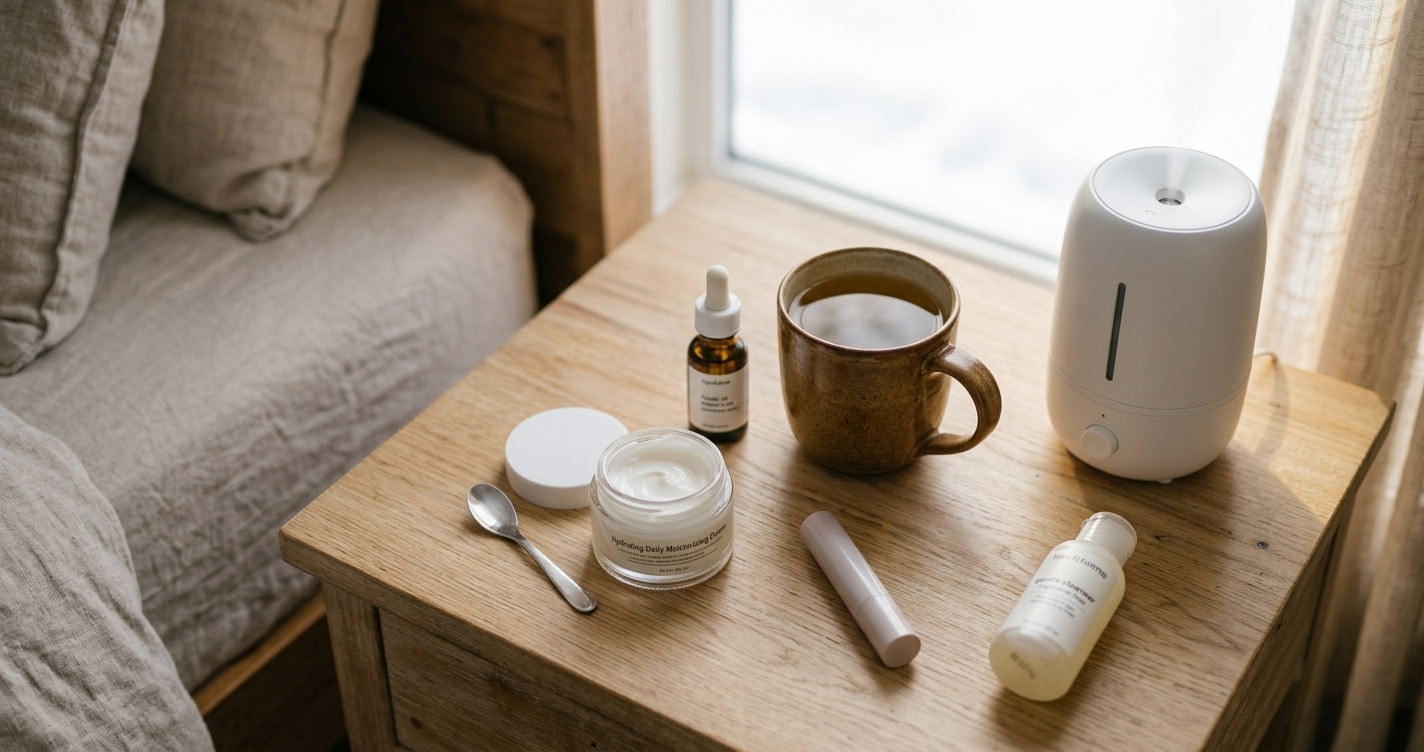
Here’s an easy routine you can adjust to your own skin.
| Time of DaySteps | Morning | Rinse your face with lukewarm water or use a gentle cleanser. Apply moisturizer while skin is slightly damp. Add SPF 30+ sunscreen. Put on lip balm. Keep hand cream handy for the day. | Evening | Take a short, lukewarm shower or wash up. Pat dry. Moisturize face and body within 2–3 minutes. Apply a thicker cream or ointment on dry areas. Use cotton gloves and socks if your hands and feet need extra care. |
When to See a Doctor
Most winter dryness can be managed at home, but sometimes skin needs more help. Make an appointment with a doctor or dermatologist if you notice:
- Severe or constant itching, especially if it keeps you awake
- Red, inflamed rashes
- Deep cracks or splits in the skin
- Bleeding
- Signs of infection, such as swelling, warmth, pus, or increasing pain
- Patches that might be eczema or psoriasis
- No improvement after 1–2 weeks of consistent home care
Don’t tough it out if something feels off. A professional can figure out what’s going on and suggest the right treatment for you.
Frequently Asked Questions
Why is my skin so dry in winter?
Cold, low-humidity air pulls moisture from your skin, and indoor heating makes it worse. Hot showers and frequent washing strip natural oils too. All of this weakens your skin barrier, so water escapes more easily and skin feels tight and flaky.
What is the best moisturizer for dry skin?
There’s no single best product, but thicker creams and ointments usually work better than thin lotions in winter. Look for ingredients like ceramides, glycerin, hyaluronic acid, petroleum jelly, or shea butter. Fragrance-free options are generally gentler. Choose one that feels comfortable on your skin and that you’ll use consistently.
Is showering every day bad for skin?
Not necessarily. It depends on how you shower. Short, lukewarm showers followed by moisturizer are fine for most people. Very hot, long showers are what tend to cause problems. If your skin is very dry, you might cut back to every other day or rinse off quickly and focus on the areas that need it.
How helpful is a humidifier?
Many people find a humidifier makes a noticeable difference, especially in rooms with strong heating, like a bedroom. Aim for about 30–50% humidity, and clean the device regularly so it doesn’t spread germs or mold.
Can drinking more water fix dry skin?
Staying hydrated is good for your overall health, but water alone usually won’t fix dry skin. Most dryness comes from moisture escaping through the skin’s surface, so topical care, like moisturizing and gentler bathing, matters more. Drinking water is a helpful extra, not the whole solution.
Final Thoughts
You don’t need a complicated routine to prevent dry skin in winter. A cooler shower, a thicker moisturizer applied at the right moment, a bit of humidity in the air, and some sunscreen can go a long way. Start with one or two changes and add more as they become habits.
Be patient with yourself, too. Your skin didn’t dry out overnight, and it may take a week or two to feel better. Keep going, and here’s to a cozy, comfortable winter.
Written by
EmmaYou might also like

Fall Allergies vs. a Common Cold: How to Tell the Difference
Sneezing, sniffling, and a stuffy nose can mean fall allergies or a common cold. Here’s how to spot the difference and what to do about it.

Early Flu Season Brings New Health Concerns for Americans
An early flu season can raise new health questions for families. Learn the symptoms, who is at higher risk, when to get vaccinated and when to see a doctor.

2026-2027 Flu Season: What Doctors Want You to Know Now
Health officials are urging Americans to get ahead of the 2026-2027 flu season early, after last winter's outbreak ranked among the worst in recent memory.
Comments (0)
Be the first to comment.