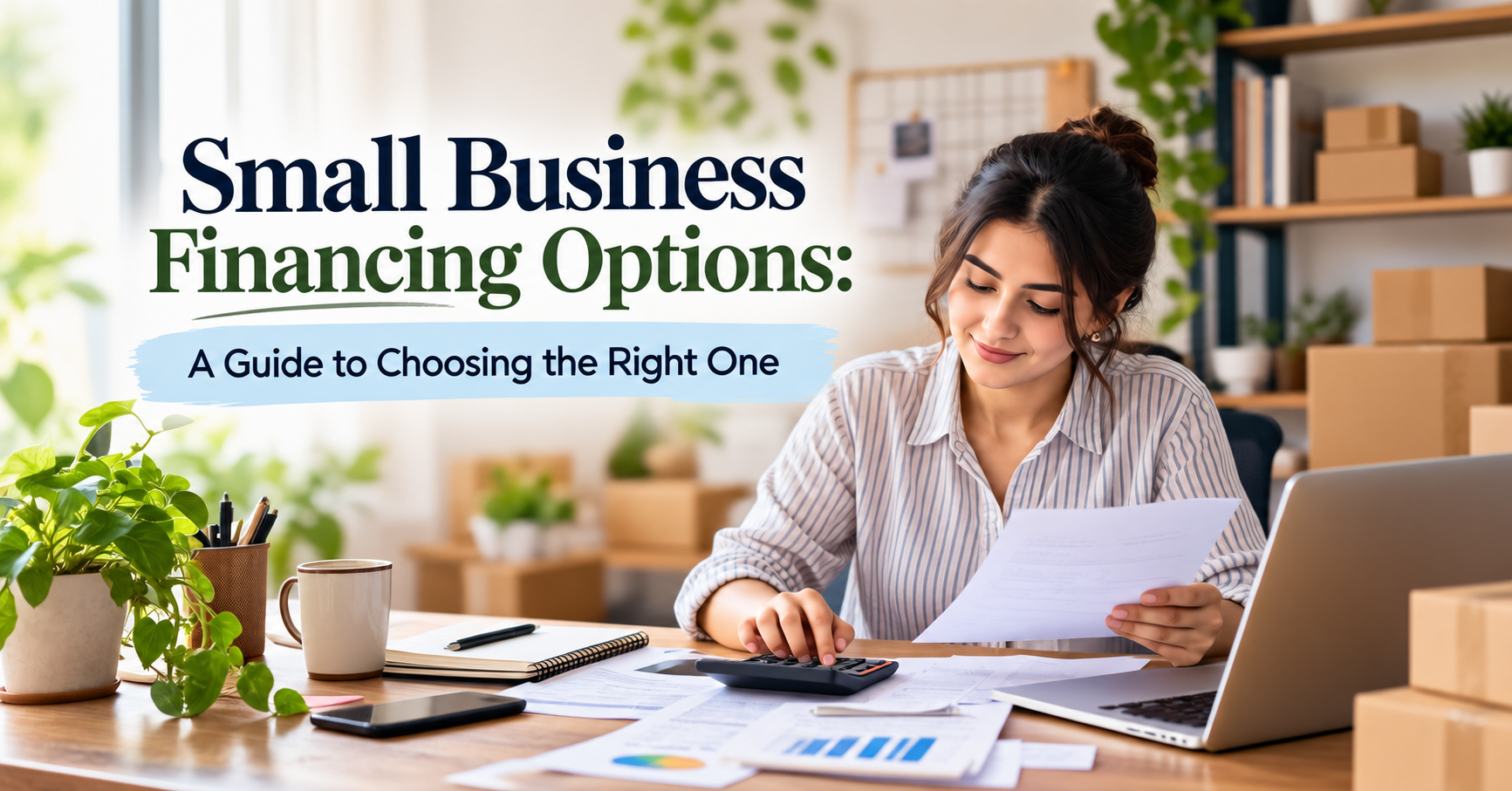
Small Business Financing Options: A Guide to Choosing the Right One
Not sure which kind of funding fits your business? This guide explains every major option, from bank loans to grants, and walks you through a practical way to choose.
Finding the Funding That Fits Your Business
Choosing among small business financing options starts with knowing which kind of money fits your needs. With financial services trends in 2026 shaping how lenders and funding providers operate, it helps to understand how each option works before you apply. This guide explains the main ones in plain language and shows you how to compare them.
Why Businesses Need Funding
Every business needs cash at some point. Maybe you’re covering startup costs like a website, licenses, or a first round of inventory. Maybe you need a new piece of equipment, or you’re waiting 45 days for a client to pay while payroll is due this Friday. Growth creates its own gaps, too, like a second location or a bigger team.
Why the Wrong Choice Can Hurt
Not all funding works the same way. A loan with a short repayment window can squeeze your cash flow, which is the money moving in and out of your business. Giving up ownership too early can cost more than interest ever would.
What This Guide Covers
This guide walks through the most common small business financing options, compares them, and gives you an eight-step process for choosing. You’ll also find a quick decision guide, common mistakes, an FAQ, and a checklist you can save.
Quick Overview of Small Business Financing Options
Most small business financing options fall into three groups.
- Debt: money you borrow and repay with interest. Examples include bank loans, SBA loans, lines of credit, credit cards, equipment financing, and microloans.
- Equity: money you receive in exchange for part ownership. Angel investors and venture capital work this way.
- Free money: funds that generally don’t need repayment, such as grants.
A few options sit in between. Invoice financing and merchant cash advances are repaid from money your business earns. Crowdfunding and personal or family funding can look different depending on how they’re set up.
Key Takeaway: Debt keeps your ownership but must be repaid, equity skips repayment but shares ownership, and grants are rare and competitive.
Types of Small Business Financing
Traditional Bank Term Loans
What it is: A bank gives you a lump sum, and you repay it in regular installments over a set period. These are the classic small business loans.
Who it may suit: Established businesses with steady revenue and solid credit.
Pros:
- Predictable payments
- Rates can be lower than many alternatives
Cons:
- Approval can be strict
- The process may take a while
Cost and repayment: Rates, fees, and terms vary by lender, credit profile, and loan type. Banks may ask for collateral, which is an asset (like equipment or property) the lender can claim if you can’t repay.
Best used for: Larger planned purchases or expansion.
SBA Loans
What it is: SBA loans are issued by banks and other lenders, with part of the loan guaranteed by the U.S. Small Business Administration. That guarantee can make lenders more willing to approve a loan. Several SBA programs exist, each with its own rules.
Who it may suit: Owners who can handle detailed paperwork and wait for a decision.
Pros:
- Terms can be favorable compared with some other loans
- Programs exist for different needs
Cons:
- Applications tend to be document-heavy
- Decisions can be slower
Cost and repayment: Loan amounts, rate rules, and repayment terms differ by program, so check the SBA’s current program details before you apply.
Best used for: Working capital (the money used for day-to-day operations), equipment, or real estate, depending on the program.
Business Line of Credit
What it is: You’re approved for a credit limit and borrow only what you need, when you need it. You typically pay interest only on the amount you use. A business line of credit works a bit like a credit card without the card.
Who it may suit: Businesses with uneven income or seasonal swings.
Pros:
- Flexible
- You can reuse it as you repay
Cons:
- Variable rates are possible
- Fees may apply even when you’re not borrowing
Cost and repayment: Check interest rates, draw fees, and renewal terms.
Best used for: Short-term cash gaps and unexpected costs.
Business Credit Cards
What it is: A credit card in your business’s name for everyday purchases. Some offer rewards or an introductory low-rate period.
Who it may suit: Owners with smaller, regular expenses who can pay balances quickly.
Pros:
- Easy to use
- Helps separate business and personal spending
Cons:
- Interest on carried balances can be high
- It’s easy to overspend
Cost and repayment: Look at the APR, or annual percentage rate, which is the yearly cost of borrowing including certain fees. Also check annual fees and penalty rates.
Best used for: Small purchases you can repay within the billing cycle.
Equipment Financing
What it is: A loan or lease used to buy equipment, with the equipment itself acting as collateral.
Who it may suit: Businesses needing vehicles, ovens, machinery, or computers.
Pros:
- Often easier to qualify for because the equipment secures the deal
- Spreads a big cost over time
Cons:
- You can lose the equipment if payments stop
- It can only fund equipment
Cost and repayment: Terms often match the useful life of the equipment. Ask about down payments and what happens at the end of a lease.
Best used for: Imagine a small bakery that needs a new oven. Equipment financing spreads that cost across monthly payments.
Invoice Financing and Factoring
What it is: A company advances you cash against unpaid customer invoices. With factoring, the company may also collect the payment from your customer.
Who it may suit: Business-to-business companies and freelancers with slow-paying clients.
Pros:
- Faster access to money you’ve already earned
- Approval often leans on your customers’ payment history
Cons:
- Fees reduce your profit
- Customers may deal directly with the finance company
Cost and repayment: Fees are often charged per week or month an invoice stays open, so compare the total cost carefully.
Best used for: Bridging the wait between invoicing and payment.
Microloans
What it is: Smaller loans, often offered by nonprofit and community lenders, and sometimes through SBA-connected programs.
Who it may suit: Startups, home-based businesses, and owners with limited credit history.
Pros:
- More accessible to newer businesses
- Some lenders offer coaching
Cons:
- Smaller amounts may not cover bigger needs
Cost and repayment: Loan limits and rates vary by program and lender.
Best used for: Initial supplies, inventory, or small equipment.
Crowdfunding
What it is: You raise small amounts from many people online. Rewards-based campaigns offer products or perks, while some platforms allow investment-style funding under specific rules.
Who it may suit: Businesses with a story or product people can easily understand.
Pros:
- Can validate demand
- Can build an early customer base
Cons:
- Campaigns need real marketing effort, and success isn’t certain
- Platforms charge fees
Cost and repayment: Rewards campaigns don’t involve repayment, but you’re expected to deliver what you promised.
Best used for: Product launches and creative projects.
Angel Investors and Venture Capital
What it is: Investors put money into your company in exchange for equity, meaning a share of ownership. Angels are usually individuals. Venture capital firms invest pooled funds.
Who it may suit: Startups aiming for rapid, large-scale growth.
Pros:
- No monthly repayments
- Investors may bring advice and connections
Cons:
- You give up ownership and some control
- Most small businesses aren’t a fit
Cost and repayment: The “cost” is the share of future profits and decisions you share.
Best used for: High-growth ventures that need major capital.
Grants
What it is: Money awarded for a specific purpose that generally doesn’t need to be repaid. Sources include government programs, nonprofits, and corporations.
Who it may suit: Businesses in targeted areas, such as research, community projects, or specific industries.
Pros:
- No repayment
Cons:
- Competitive
- Applications take time, and rules can be strict
Cost and repayment: Reporting requirements and spending restrictions often apply. Be cautious of anyone charging fees to “find” grants for you.
Best used for: Projects that match the grant’s stated goals.
Personal Savings and Friends/Family Funding
What it is: Using your own money or borrowing from people you know.
Who it may suit: Early-stage owners, or anyone who wants to avoid formal lenders.
Pros:
- Flexible terms
- No credit check in many cases
Cons:
- Personal savings are at risk
- Money can strain relationships
Cost and repayment: Put the terms in writing, even with family, so everyone shares the same expectations.
Best used for: Startup costs and early experiments.
Merchant Cash Advances
What it is: A company gives you cash upfront, and you repay it from a share of daily or weekly sales, or through fixed withdrawals. It’s technically an advance, not a loan.
Who it may suit: Businesses with steady card sales that can’t qualify elsewhere and have weighed alternatives.
Pros:
- Fast access
- Approval often depends more on sales than on credit
Cons:
- Can be very costly
- Frequent repayments can strain cash flow
Cost and repayment: Costs are often shown as a “factor rate” instead of APR, which can make them hard to compare. Ask for the total payback amount and, if possible, an estimated APR.
Best used for: Rare situations where a business has carefully compared lower-cost options first.
Key Takeaway: Each option solves a different problem, and the cheapest-looking choice isn’t always the best fit.
Comparing All Small Business Financing Options
Here’s how the options generally stack up. These are broad ranges, and individual offers vary widely.
Fastest Options to Receive
- Business credit card: Fast. Cost is moderate to high. Eligibility is low to moderate. Risk is moderate. Best for small purchases.
- Invoice financing: Fast. Cost is moderate to high. Eligibility is low to moderate. Risk is moderate. Best for slow-paying clients.
- Merchant cash advance: Fast. Cost is high. Eligibility is low. Risk is high. Best for last-resort bridging.
- Savings, friends and family: Fast. Cost varies. Eligibility is low. Risk is moderate to high. Best for early-stage costs.
Mid-Speed Options
- Business line of credit: Moderate speed. Cost is moderate. Eligibility is moderate. Risk is moderate. Best for cash flow gaps.
- Equipment financing: Moderate speed. Cost is moderate. Eligibility is moderate. Risk is moderate. Best for equipment.
- Microloan: Moderate speed. Cost is moderate. Eligibility is low to moderate. Risk is low to moderate. Best for startups and small needs.
- Crowdfunding: Speed varies. Cost varies. Eligibility varies. Risk is low to moderate. Best for product launches.
Slower Options
- Bank term loan: Slow. Cost is low to moderate. Eligibility is high. Risk is moderate. Best for planned expansion.
- SBA loan: Slow. Cost is low to moderate. Eligibility is high. Risk is moderate. Best for larger long-term needs.
- Grants: Slow. Cost is none to low. Eligibility is high. Risk is low. Best for specific projects.
- Angel investors and venture capital: Slow. Cost is high in ownership. Eligibility is very high. Risk is moderate. Best for high-growth startups.
How to Choose the Right Financing Option
Choosing among small business financing options gets easier when you take it one question at a time. Here’s a simple process for how to choose business financing.
Step 1: Define Exactly What the Money Is For
Write down the purpose. Equipment, inventory, payroll gaps, and marketing each tend to fit different products. Matching the funding to the need keeps costs down.
Step 2: Decide How Much You Need
Add up the real costs, then consider a small buffer. Borrowing too little can leave you stuck. Borrowing too much means paying interest on money you don’t use.
Step 3: Decide How Fast You Need It
Some options take days, others take months. Speed often costs more, so check whether you can plan ahead.
Step 4: Check Your Credit Profile and Business History
Lenders usually look at personal and business credit, time in business, and revenue. Knowing your numbers helps you see which options may be realistic.
Step 5: Estimate Your Repayment Ability From Cash Flow
Look at monthly income and expenses, then test whether a payment fits during your slowest months. Seasonal businesses may need extra caution.
Step 6: Decide Whether You’re Willing to Give Up Ownership
Equity means sharing control and future profits. Some founders welcome that. Others don’t. It depends on your goals.
Step 7: Compare Total Cost (APR, Fees, Penalties), Not Just the Interest Rate
A low rate can hide origination fees, prepayment penalties, or late charges. Ask for the total repayment amount and compare offers using APR where available.
Step 8: Read the Full Terms Before Signing
Check for personal guarantees, collateral, automatic withdrawals, and what happens if you miss a payment. If anything is unclear, a licensed professional can help.
Quick Decision Guide
These are general ideas, not personal advice.
- If you’re just starting and have little revenue, savings, friends and family, microloans, grants, or crowdfunding may be worth considering.
- If you have uneven income, a business line of credit can be worth considering.
- If you need equipment, equipment financing may be a good fit.
- If clients pay slowly, invoice financing may help bridge the gap.
- If you’re established and planning a major expansion, bank loans or SBA loans may be worth exploring.
- If you want rapid, large-scale growth and accept sharing ownership, angel or venture funding may fit.
- If you’re considering a merchant cash advance, compare the total cost with every other option first.
Key Takeaway: Your situation, not a one-size-fits-all rule, decides which option may fit.
Common Mistakes to Avoid
Borrowing Too Much
Extra cash feels comfortable, but you still repay it with interest.
Ignoring Fees
Origination fees, service fees, and penalties add up.
Choosing Only by Speed
Fast funding can carry a higher price.
Mixing Personal and Business Finances
It complicates taxes, credit, and legal protection.
Having No Repayment Plan
Know where each payment will come from before you sign.
Tips to Improve Your Chances of Getting Funded
Prepare a Clear Business Plan
Explain what you do, who your customers are, and how the funds will be used.
Keep Your Books Clean
Organized records show lenders you track your money.
Look After Your Credit
Pay bills on time and keep balances manageable.
Gather Documentation Early
Tax returns, bank statements, and financial statements are commonly requested.
Apply Selectively
Several applications in a short time may affect your credit, depending on the lender.
Frequently Asked Questions
Can you get business financing with no credit history?
Yes, it may be possible, but choices are narrower. Microloans, some equipment financing, invoice financing, crowdfunding, grants, and personal or family funding may be worth exploring. Lenders may ask for a personal guarantee or collateral. Requirements vary by lender and program.
What is the easiest small business financing option to qualify for?
There’s no single answer, because it depends on your profile. Options secured by something specific, like equipment or unpaid invoices, may be easier to qualify for than unsecured loans. Easier approval often comes with higher costs, so compare the total price, not just your chances of being accepted.
What is the best funding option for startups?
It depends on your situation. Startups with little revenue often lean on personal savings, friends and family, microloans, grants, or crowdfunding. Bank loans and SBA loans can be harder to get without operating history, so many founders explore several routes at once.
What’s the difference between loans and equity funding?
A loan is borrowed money you repay with interest and fees, and you keep full ownership. Equity funding means selling a share of your business to investors in exchange for cash. You don’t make monthly repayments, but you share ownership, profits, and often some decision-making power.
Does applying for financing affect my credit?
It can. Some lenders run a hard credit check, which may lower your score slightly for a short time, while others use a soft check for pre-qualification. Ask which type a lender uses before you apply, and try to submit applications within a short window.
What is APR, and why does it matter?
APR, or annual percentage rate, shows the yearly cost of borrowing, including interest and certain fees. It helps you compare offers more evenly. Some products, like merchant cash advances, use factor rates instead, so you may need to ask for the total payback amount.
Your Next Step
The right choice among small business financing options depends on your purpose, timeline, credit, cash flow, and comfort with sharing ownership. A low-cost option that takes months may be worth it if you can wait. A faster one may make sense if you’ve checked the total cost.
A good next step is to gather two or three offers and compare them side by side using the checklist above. Speaking with a licensed accountant, attorney, or financial professional can help you review the details before you commit.
Written by
EmmaYou might also like

How to Find Affordable Health Insurance in 2027
Confused by deductibles and plan levels? This beginner’s guide explains 2027 health insurance in plain English.

No-GMAT MBA Programs in the US for Finance Careers
Looking for a no-GMAT MBA for a finance career? See how GMAT waivers work, who qualifies, 8 US programs to explore, and how to apply step by step.

How Financial Services Are Changing in the US in 2026
Banking apps, AI, instant payments, and embedded finance are changing how Americans manage money. Explore the financial services trends 2026 and learn simple ways to stay safe and save smarter.

Americans Changing Their Budgets for How Households Are Adjusting
Groceries, housing, transportation, and subscriptions are putting pressure on monthly budgets. Here's how households are adjusting and what practical steps they consider.
 Trending
US Stock Market Outlook Sept 2026: Fed, Inflation & Oil
Inflation, an oil price shock from Middle East conflict, and a critical Fed decision are colliding to shake U.S. markets.

Fed Rate Decision September 16 Turns Into a Total Toss-Up
Discover why the Fed's September 16 rate decision has become a coin flip, as oil-driven inflation, mixed jobs data and Chair Kevin Warsh's hawkish tone keep pulling the odds between a hike and a hold.
Comments (0)
Be the first to comment.